A Practical Guide to Wildfire Defensible Space Clearing
Wildfires are becoming a serious concern in many regions. For homeowners and landowners, the risk is no longer only about forests far away. Fires can spread quickly through dry brush, tall grass, and dense vegetation close to homes.
Wildfire defensible space clearing is among the top land clearing services any property owner should consider investing in.
Defensible space does not equate to cutting down all trees. The idea is to clear and manage vegetation in such a way that fire intensity is lowered and firefighters are offered a safer working environment to protect the buildings.
There is great emphasis in this piece on the issue of wildfire mitigation, the significance of defensible space, and how land clearing is the main factor in alleviating fire hazards.
What Is the Meaning of Wildfire Mitigation?
Wildfire mitigation means taking steps to reduce the chance that a fire will start, spread, or damage property.
It includes actions such as:
- Removing flammable vegetation
- Reducing fuel loads near buildings
- Improving access for emergency crews
- Creating safe buffer zones
- Following local fire safety rules
Mitigation does not guarantee a fire will never happen. It lowers the risk and reduces the damage if one does.
Land clearing is the foundation of most wildfire mitigation plans.
What Is Defensible Space Clearing?
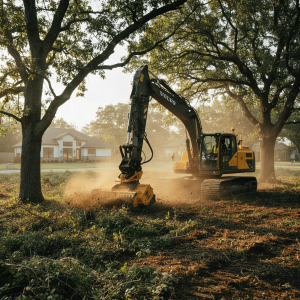
Defensible space clearing is the process of clearing brush, dead vegetation, and overgrowth around a home or structure.
The goal is to create a safer area where fire cannot easily spread.
Wildfire defensible space clearing usually involves:
Removing dry brush and undergrowth
- Thinning dense trees
- Clearing dead limbs and fallen debris
- Creating separation between vegetation and structures
- Managing what happens to cleared material
The debris question matters here.
Contractors must decide:
- Will the brush be mulched on-site?
- Will it be hauled away?
- Can burning be used, and is it allowed?
Debris handling affects both safety and cost.
What Is the Purpose of Creating Defensible Space Around a Property?
Defensible space has one clear purpose.
It reduces the fuel available for wildfire near your home.
When vegetation is too close, fire can move directly to structures through:
- Flames
- Radiant heat
- Wind-blown embers
A cleared zone helps by:
- Slowing fire spread
- Reducing flame height
- Giving firefighters room to work
- Lowering the chance of ignition from embers
In many wildfire-prone areas, defensible space is not optional. Local codes may require it.
What Are the Mitigation Techniques for Wildfires?
Wildfire mitigation involves several proven techniques. Most of them start with land clearing and vegetation control.
- Brush and Undergrowth Removal
Dense underbrush is one of the most dangerous fire fuels.
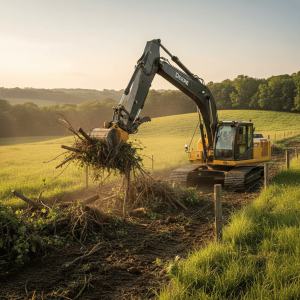
Clearing brush reduces fire intensity and helps stop ground fires from climbing into tree canopies.
This is often the first step in wildfire defensible space clearing.
- Tree Thinning and Spacing
Defensible space does not always mean removing trees.
It often means thinning them.
Proper spacing prevents crown fires, where flames spread through treetops.
A contractor may remove:
- Smaller trees
- Trees too close together
- Dead or diseased growth
- Removing Dead Material and Debris
Dead vegetation burns fast.
This includes:
- Fallen branches
- Dry leaves
- Dead shrubs
- Stumps and old piles
Cleaning this material is one of the most effective mitigation actions.
- Creating Fuel Breaks
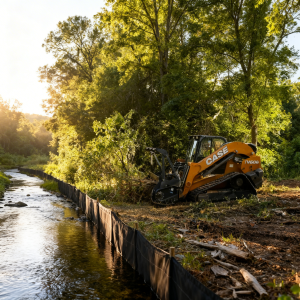
A fuel break is a cleared strip of land designed to slow fire spread.
Fuel breaks are common on:
- Large rural properties
- Fence lines
- Driveway corridors
- Perimeter edges
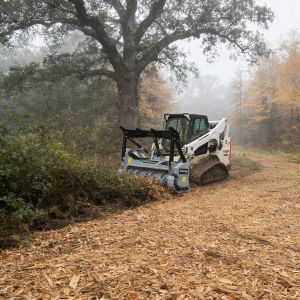
Mulching is often used here because it avoids hauling large debris piles.
- Maintaining Access and Emergency Routes
Fire crews need room to move equipment safely.
Land clearing helps ensure:
- Driveways are open
- Roads are accessible
- Vegetation is not blocking entry
Poor access increases risk during emergencies.
- Using Fire-Resistant Landscaping Near Structures
The closest zone around the home should have low-flammability materials.
This may include:
- Gravel
- Short green grass
- Low-risk plants
Land clearing creates the space needed for these safer designs.