Site Preparation:
Getting the Ground Ready to Build
Site preparation is the stage that follows land clearing.
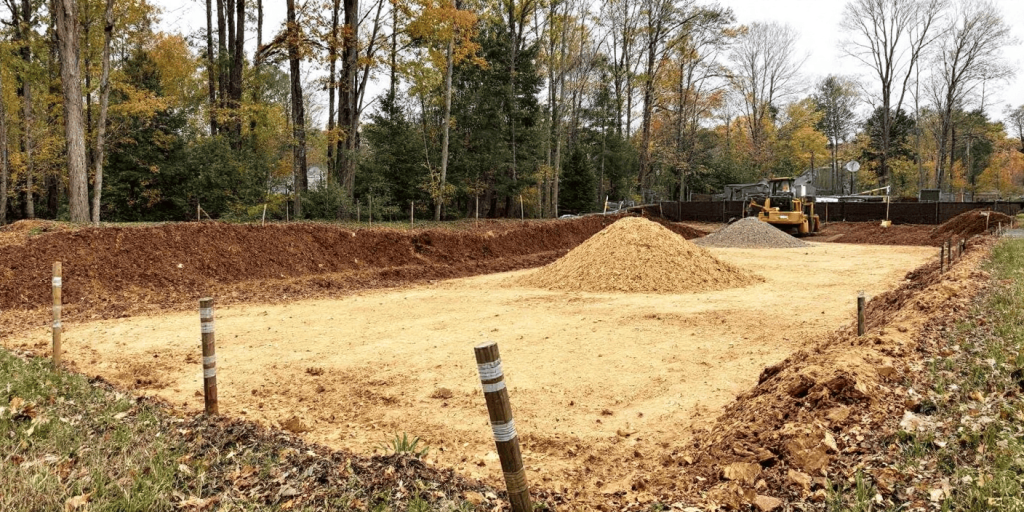
After trees and brush are removed, the soil remains unprepared for construction. Site preparation involves shaping, strengthening, and planning the ground to enable safe building. This is when the area truly becomes suitable for construction.
While land clearing focuses on removing obstacles, site preparation ensures that the soil and design are suitable for the subsequent stage.
Strategy First. Excavation Second.
The Technical Pillars of Site Preparation
Site preparation is the engineering bridge between a cleared lot and a construction-ready site. While land clearing removes the obstacles, site preparation ensures the ground itself is structurally sound and ready to support a heavy foundation.
This phase is critical, mistakes made in the dirt today will lead to expensive structural failures, drainage issues, and cracked foundations years down the road.
The 6 Critical Elements of Site Prep
Precision Grading and Leveling
Grading is the process of cutting and shaping the earth to create a functional footprint for your project. A professional operator uses laser-guided equipment to ensure the ground is perfectly level for foundations or precisely sloped for proper runoff. This technical accuracy ensures your builder starts with a “blank slate,” preventing expensive corrections later in the construction phase.
Soil Compaction and Structural Stability
Ensuring the earth is dense enough to support a heavy load is the most important step in the entire process. Loose soil must be packed down using heavy machinery to remove air pockets that could cause the ground to “settle” over time. This structural stabilization prevents your house pad or driveway from shifting, ensuring your investment stays level and crack-free for decades.
Drainage Strategy and Water Control
A professional site prep job is as much about water management as it is about moving dirt. Contractors engineer the grade to ensure water flows away from the building site, protecting your structures from erosion, flooding, and moisture damage. Solving drainage issues before you build is significantly cheaper than trying to fix a wet basement or a sinking yard after the project is finished.
Building Pads and Foundation Base Work
The building pad is the specific area where your house or commercial structure will sit. Contractors install a precisely engineered base layer of structural fill to create a high-density “shelf” for your foundation. A well-constructed pad provides a stable, uniform surface that allows foundation crews to work efficiently and accurately.
Logistical Access and Construction Roads
Before your builder arrives, you must have a stable path for heavy delivery trucks and concrete mixers. Site prep includes clearing and stabilizing temporary access roads so that machinery doesn’t get stuck or destroy your topsoil. Proper access planning keeps your project on schedule and prevents expensive repairs to your driveway during the construction process.
Regulatory Compliance and Permit Adherence
Navigating local grading laws and runoff rules is a vital part of professional site preparation. Most counties have strict standards for how you move dirt and manage sediment to protect the surrounding environment. A professional team ensures your site meets these specific permit requirements, helping you avoid costly fines or “Stop Work” orders from local inspectors.
Why Site Prep Matters More Than People Think
Good site preparation helps prevent:
*Foundation cracks
*Uneven settling
*Standing water near buildings
*Failed inspections
*Expensive delays during construction
Important: A site can be cleared and still be unusable until proper grading and drainage are done.
Contact us today!
We would love to speak with you.
Feel free to reach out using the below details.
Why Trust LandClearingCost.com?
Nationwide Market Intelligence: We monitor cost trends across all 50 states to provide accurate 2026 data.
Contractor Vetting: We prioritize reliability, helping you find professionals with modern fleets and high-limit insurance.
Unbiased Advocacy: We don’t just find you a pro; we teach you how to work with them for the best possible outcome.
Take the First Step in Your Land Journey.
Tell us about your property and your goals. We’ll help you understand the costs and match you with the right local expert in your county.