Brush & Tree Clearing: Property Value & Usability
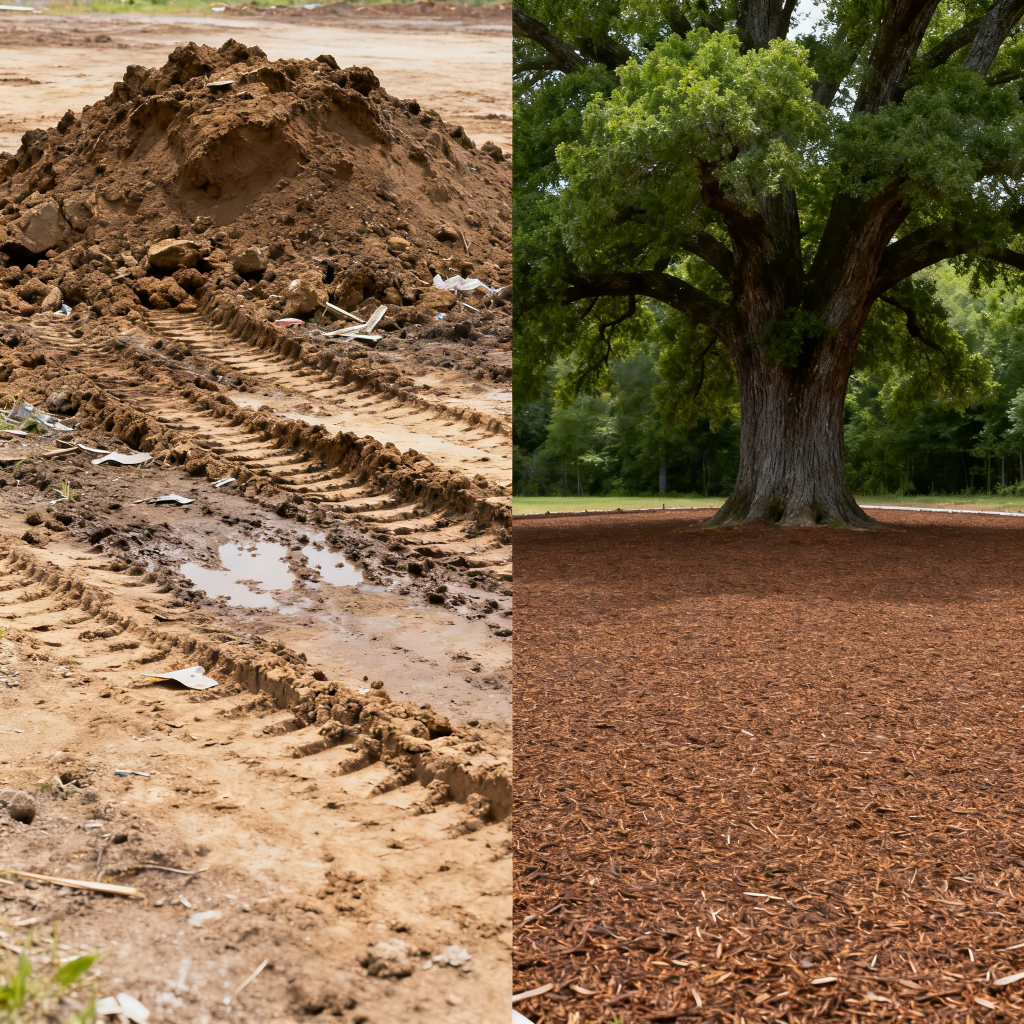
Book now Property value land clearing Property value is not only about location. It is also about how usable, safe, and ready the land is.
Technology in land clearing
Land clearing methods have undergone significant changes over the past ten years. Once a strenuous, chaotic, and semi, annually highly disruptive activity, it has become quicker, safer, and more controlled.
New machines and smart gadgets have changed radically how contractors clear land. Today, tech in land clearing empowers owners to slash costs, protect the soil, and enjoy easy project runs.
The article discusses the impact of technology on land clearing, lists the equipment presently in use, and explains why modern methods generally yield better results.
Land clearing is not just cutting trees. It is about preparing land for safe use.
Technology improves land clearing by helping crews:
For both residential and commercial projects, modern tools make land clearing more predictable.
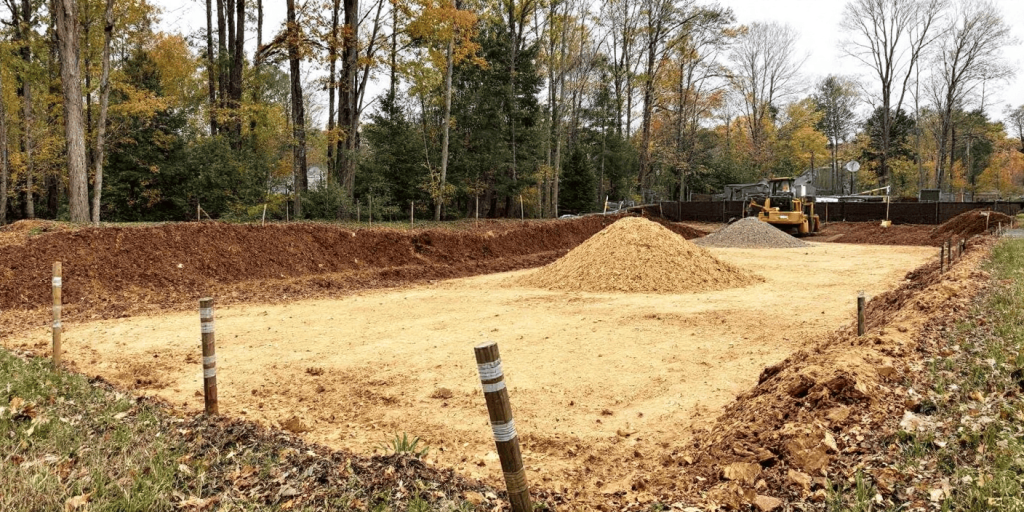
In the past, clearing often relied on bulldozers pushing everything into piles. Burning or hauling debris added further cost and environmental issues.
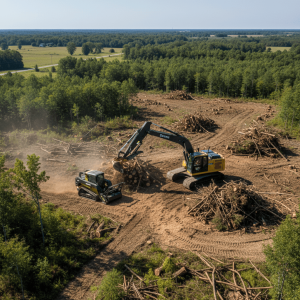
Currently, specialized machines designed for different conditions are used in modern land clearing.
Rather than hitting the area hard once, the contractor can match different kinds of equipment to the land. That is one of the biggest advantages of technology in land clearing.
One of the most important modern methods is forestry mulching.
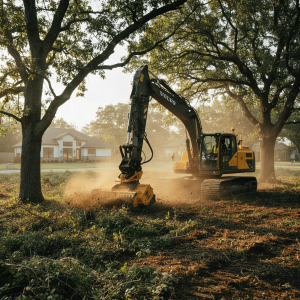
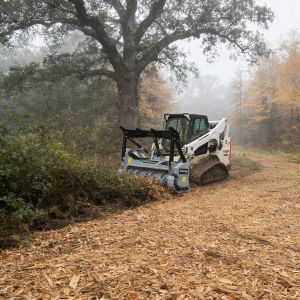
A forestry mulcher cuts and grinds vegetation into mulch on-site. Instead of hauling trees away, the material is processed where it falls.
Mulching is one of the ways to:
This technique helps lower the cost of debris removal and, in most cases, prevents burning. Forestry mulching is a prime example of how technology has enhanced land clearing.
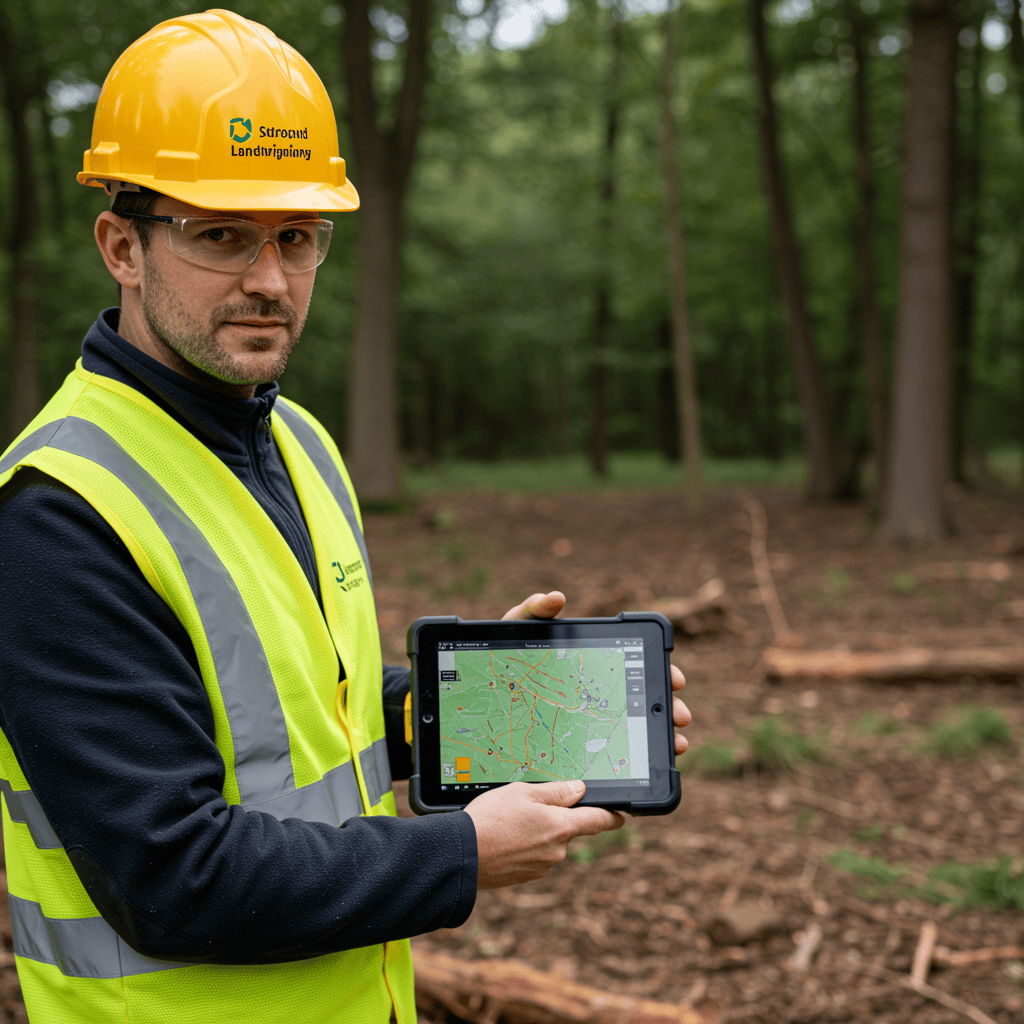
Land clearing today typically relies on digital maps as a starting point.
Besides helping with green planning, GPS tools allow contractors to:
Good mapping lessens errors and is therefore one of the ways to stop the clearing of areas beyond those planned.
Homeowners (through landowners), therefore, have less ground for complaints and get more accurate quotes.

Book now Property value land clearing Property value is not only about location. It is also about how usable, safe, and ready the land is.

Book now Land development opportunities Land development starts with one simple question: what can this land become? Many properties look unusable at first. They can
Book now Land clearing regulations Land development always starts with clearing the land. Before homes, roads, businesses, or farms can be built, vegetation and debris

Book now Future of land clearing Land clearing has always been the first step in turning raw land into usable space. Whether the goal is

Book now Building site clearing Every home starts with an idea, but it becomes real only when the land is ready. Before a foundation can

Book now Site preparation challenges Site preparation is one of the most essential parts of any land clearing project. Before a home, shop, road, or

Book now Erosion control and land clearing Land clearing is often the first step in building, farming, or improving a property. Trees, brush, and undergrowth

Book now Property maintenance underbrush Underbrush may seem like a small issue at first. It is easy to ignore a patch of vines, thick shrubs,
Book now Underbrush removal is one of the most important first steps in land clearing. Any piece of land if has to be used for
Book now (Land Clearing Equipment List) Land clearing is more than just cutting down trees and pushing the brush away. It is a professional process
Drones are a common tool for large-scale land-clearing projects.
By not having to go through the actual readied-upstage equipment on land, contractors can use drones for aerial inspections.
Furthermore, besides vegetation that is hard to tell from the ground drone images, it can disclose:
This leads to time savings and better decisions at the beginning of the project.
Land-clearing technologies include smart planning tools and machines.
Soil health is a major concern during clearing.
Older clearing methods often caused:
Modern equipment is designed to reduce these issues. Tracked machines spread weight more evenly. Mulchers avoid uprooting soil. Precision tools reduce unnecessary disturbance.
This is especially important for:
Technology helps protect the land while still preparing it for use.
Better Debris Handling Through Modern Methods
One of the biggest challenges in land clearing is debris.
After trees and brush are removed, contractors must decide:
Modern clearing methods, especially mulching, reduce debris piles and hauling needs.
This is likely what helps with cleaning and can also bring down costs. Debris removal remains one of the major pricing factors, but different technologies offer many more options.
Contractors of today primarily rely on software programs to develop more accurate estimates.
Digital systems allow the breaking up of pricing into more detail, rather than simply giving a total price, such as:
This gives the landowners a better understanding of what exactly their money is going towards. In fact, land clearing technology can provide a more transparent and clearer picture of the cost, particularly when dealing with large or complicated sites.
We would love to speak with you.
Feel free to reach out using the below details.
Land clearing involves heavy equipment, falling trees, and uneven terrain.
Modern safety technology help to minimize the risks through:
These modernizations not only help to prevent accidents but also maintain the safety of the surroundings.
Technological tools are indispensable for professional crews in their effort to maintain work control and safety at the highest level.
Environmental Compliance Is a Snap with Modern Tools
Land clearing is now more regulated than at any other time in the past. Private landowners and developers need to be prepared for the rigorous rules commonly imposed on contractors these days.
Frequently, contractors are required to:
Modern tools help contractors work within these limits.
Mapping, drones, and low-impact methods make it easier to clear responsibly while complying with local regulations.
What Technology Cannot Replace
Even with advanced tools, technology does not replace experience.
Land clearing still requires:
Technology supports professional work, but it cannot replace professional judgment.
Great results rarely come from either state-of-the-art equipment or an expert’s hands alone; in fact, the best outcome is always when this duo is perfectly combined.
The Future of Technology in Land Clearing
Technology will continue to have a major impact on land-clearing processes, even in the very distant future. The next advancements might be:
With increasing demand for cleaner, more efficient land preparation, modern equipment will be of utmost importance.
Final Thoughts
Technological advances in land clearing have, to some extent, greatly changed the face of the industry. Landowners now have access to various means of clearing land, such as machinery/equipment, mapping tools, drones, and mulching, that provide more efficient ways to clear land, reduce waste, and prevent long-term problems.
Land clearing is still the foundation of any development project. With the right technology and the right contractor, it can be done faster, safer, and with better results.
Modern land clearing is not just about removing vegetation. It is about preparing land responsibly for whatever comes next.