Tools of the Trade: Underbrush Removal (Underbrush Removal Tools)

Underbrush removal is one of the most important first steps in land clearing. Any piece of land if has to be used for construction, fencing, making trails, or even to carry out simple maintenance needs, removal of thick undergrowth first.

The underbrush might seem harmless at first, but barely; it is hiding things like stumps, uneven ground, pests, and fire hazards. Moreover, it can make the property look and feel small and unworkable. Properly removing it would require the right tools, as manually clearing dense brush is slow, tiring, and frequently dangerous.


Here is a guide that lists the top underbrush removal tools, explains how each tool works, and outlines how professionals select the best equipment for the job.

What Is Underbrush Removal?

Underbrush removal is the process of clearing low vegetation, such as:

  • Thick brush
  • Shrubs and vines
  • Small trees and saplings
  • Overgrown weeds
  • Dead limbs and ground debris

Unlike full land clearing, underbrush work usually focuses on opening up visibility and access without removing every large tree.


Underbrush removal is often done to:

  • Reclaim property lines
  • Prepare land for construction
  • Reduce wildfire risk
  • Improve land value and usability
  • Create trails or open space
Tools of the Trade_ Underbrush Removal (Underbrush Removal Tools)

Why the Right Tools Matter

Underbrush can be dense, tangled, and difficult to remove. Using the wrong equipment can lead to:

  • Higher labor costs
  • Regrowth problems
  • Soil damage
  • Safety risks
  • Slow progress


Professional land-clearing crews rely on specialized underbrush-removal tools to work efficiently and safely.

Why the Right Tools Matter (1)
Deciding on the Best Underbrush Removal Equipment (1)

Essential Underbrush Removal Tools

Several tools commonly used to clear brush and light vegetation are listed below.


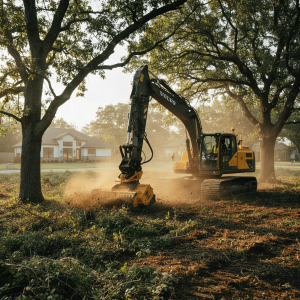
  1. Forestry Mulcher

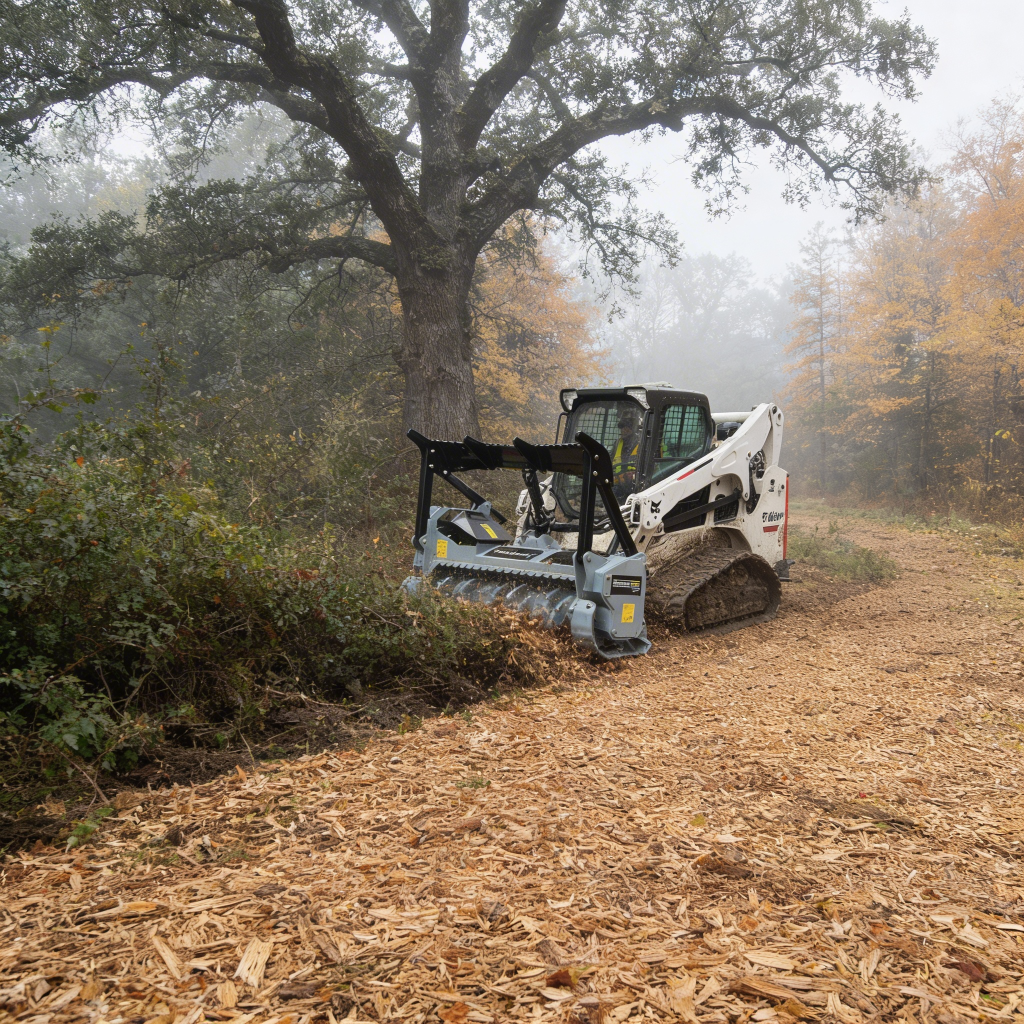
A forestry mulcher is one of the best machines for underbrush removal. It pulverizes brush, saplings, and small trees into on-site mulch.

Best for:

  • Thick brush
  • Overgrown lots
  • Large acreage undergrowth

Why it is popular :

  • Does not require hauling
  • Fast clearing
  • Makes mulch that helps reduce erosion


When underbrush is heavy and is a disposal of debris concern, forestry mulching is usually the best choice.

2. Brush Hog (Rotary Cutter)

A brush hog is a rugged mowing attachment that is utilized for cutting through tall grass and light brush.

Best for:

  • Open fields
  • Light vegetation
  • Pasture maintenance


Brush hogging is generally less expensive than mulching, but it does not get rid of the roots or woody debris.

Underbrush Removal and Debris Handling (1)

Share:

More Posts

Send Us A Message

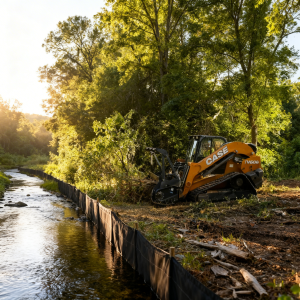
3. Skid Steer with Brush Attachments

Skid steers are versatile machines that can carry multiple attachments for brush clearing.

Common attachments include:

  • Mulching heads
  • Grapple buckets
  • Brush cutters

Best for:

  • Residential lots
  • Tight access areas
  • Fence line clearing


Skid steers are often used for cleanup work after larger machines.

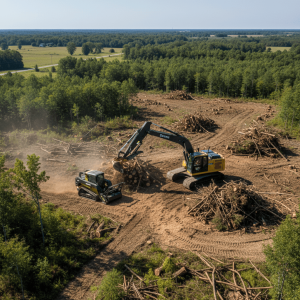
  1. Excavator (Selective Clearing)

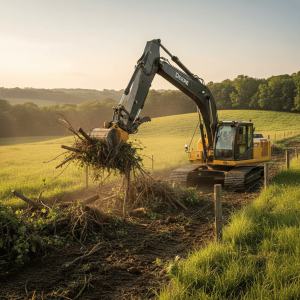
Excavators are used when removing underbrush includes stump removal or the extraction of larger trees.

Best for:

  • Removing roots
  • Thick woody growth
  • Clearing areas for foundations

While excavators are very powerful, they often require more work for cleanup and debris handling.

  1. Chainsaws

Chainsaws continue to be among the most widely used manual tools for the removal of underbrush.

  • Cutting small trees
  • Trimming thick growths close to buildings
  • Selective clearing


Chainsaws offer high accuracy, but they are still prone to accidents.

  1. Brush cutters and clearing saws

Brush cutters are small, portable tools specifically designed to cut thick weeds, pieces of climbing plants, and small trees.

Most suitable for:

  • Areas that are difficult to reach
  • Steep slopes
  • Detailed clearing


Since these tools are very light, they are the best option when it’s unsafe for machines to get on the site.

7. Hand Tools (Loppers, Machetes, Axes)

When the work is small, hand tools are still a good option.

Among typical hand tools are:

  • Loppers to cut thick branches 
  • Machetes to cut vines and tall grass 
  • Axes to cut small wood growth 


Manual clearing is labor-heavy, but it works well for:

  • Small boundary cleanup
  • Sensitive areas
  • Finishing work
  1. Stump Grinder (Optional)

If underbrush removal includes clearing old stumps, a stump grinder may be needed.

Best for:

  • Yard preparation
  • Landscaping projects
  • Areas where excavation is not required


Grinding stumps reduces tripping hazards and improves long-term usability.


  1. Grapple Attachments

Once brush is cut, it must be moved or piled. Grapples are great for picking up debris.

Used for:

  • Collecting brush piles
  • Loading debris
  • Cleanup after clearing


After clearing, debris disposal is at times the main cost driver for underbrush removal.

land clearing costs usa check today

10. Dump Trucks (If Hauling is Required)

If the brush is not allowed to remain as on-site mulch, trucking may be necessary for its removal. 

Hauling after clearing increases the costs through:

  • Time spent on transporting
  • Money paid for dumping the waste
  • The need for extra workers

That is why mulching is always the first choice when it is feasible.

Contact us today!

We would love to speak with you.
Feel free to reach out using the below details.

Deciding on the Best Underbrush Removal Equipment

The appropriate tool will depend on the factors such as:

  • Density of the vegetation
  • Area of the property
  • Topography and accessibility
  • Debris disposal method
  • Intended use of the land


Among other things:

  • A brush hog could be sufficient to clear light brush on an open field.
  • Forestry mulching may be the answer in a thick undergrowth.
  • Excavation and uprooting may be part of construction prep.

Underbrush Removal and Debris Handling

One of the biggest questions is:

What happens to everything that gets cut?

Options include:

  • Mulching it on-site
  • Piling it for later removal
  • Hauling it away
  • Burning it where allowed

Debris handling often determines the true cost of the project.

Safety Considerations

Underbrush removal involves hazards such as:

  • Hidden stumps and uneven ground
  • Snakes, insects, and pests
  • Flying debris from cutting tools
  • Fire risk during dry seasons


Professional crews use protective equipment and follow safe operating practices.

Final Thoughts

Underbrush removal is a key part of land clearing and property improvement. Finding the right equipment to remove underbrush can really make the job go faster, be safer, and be cheaper.

Whether it is forestry mulchers, brush hogs, chainsaws or hand tools, every tool is designed for a particular function. Excellent results are attained when the tools are aligned with the terrain and a proper plan for the disposal of the debris is in place.

Removing underbrush is more than just creating a nice look. It is about rendering the property suitable for use, safe, and prepared for the next step.

Join Our Newsletter

INFORMATION

© 2026 LandClearingCosts.com - All rights reserved