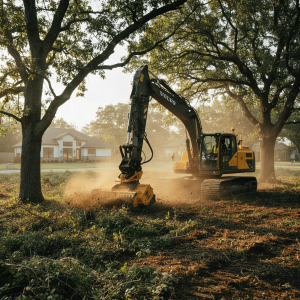
Brush & Tree Clearing: Property Value & Usability
Book now Property value land clearing Property value is not only about location. It is also about how usable, safe, and ready the land is.
When people plan a construction or land project, their attention goes straight to the final result. A house. A shop. A field. A larger yard. A new access road.
What often gets ignored is the step that makes all of that possible: professional land clearing. Before grading, drainage, or building can begin, the land must be cleared correctly.
If land clearing is rushed, misunderstood, or handled poorly, every step that follows becomes harder, slower, and more expensive. Land clearing is not just the first step. It is the step that determines whether the rest of the project succeeds.
Land clearing is the removal of unwanted trees, brush, stumps, roots, and surface debris from a property. Most raw land is not usable in its natural state.
Clearing prepares land so it can be safely accessed, evaluated, and improved.
While many people associate land clearing only with building homes, it serves far more purposes.
Land clearing is commonly used to:
No matter the goal, proper clearing is what allows the land to be used with confidence.
Clearing land may look simple from a distance. Cut trees. Push the brush. Move on.
In reality, land clearing is a technical process that requires planning, experience, and the right equipment.
Professional land clearing guarantees:
When clearing is carried out by inexperienced people, issues arise very quickly.
These issues turn into major costs later.
Land clearing and land preparation are not the same thing.
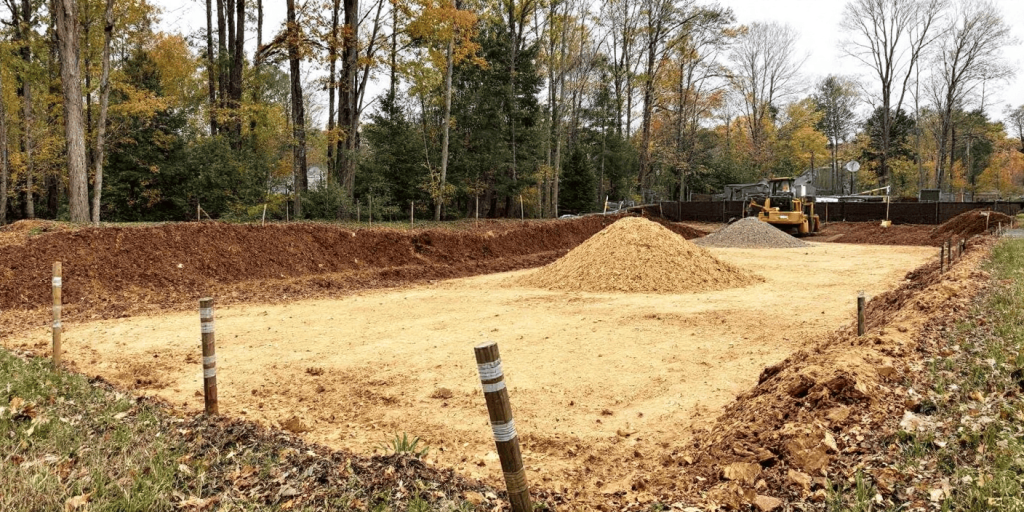
Land clearing removes obstacles. Land preparation shapes and stabilizes the ground.
Grading, compaction, and drainage cannot be done correctly if trees, stumps, and roots are still in the way.
Trying to skip or rush clearing often leads to:
Professional site preparation always starts with proper land clearing.
The clearing method depends on the property and the goal. There is no single approach that works for every job.
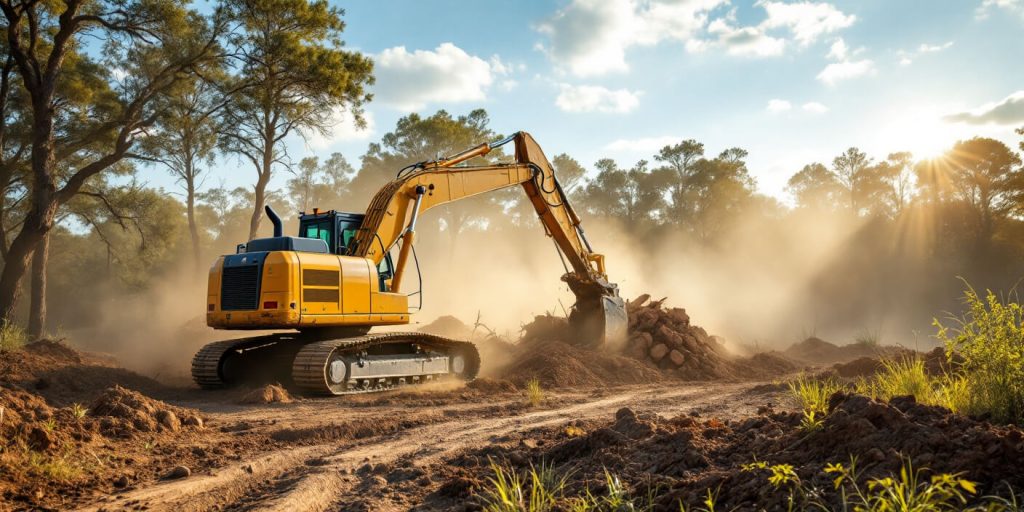
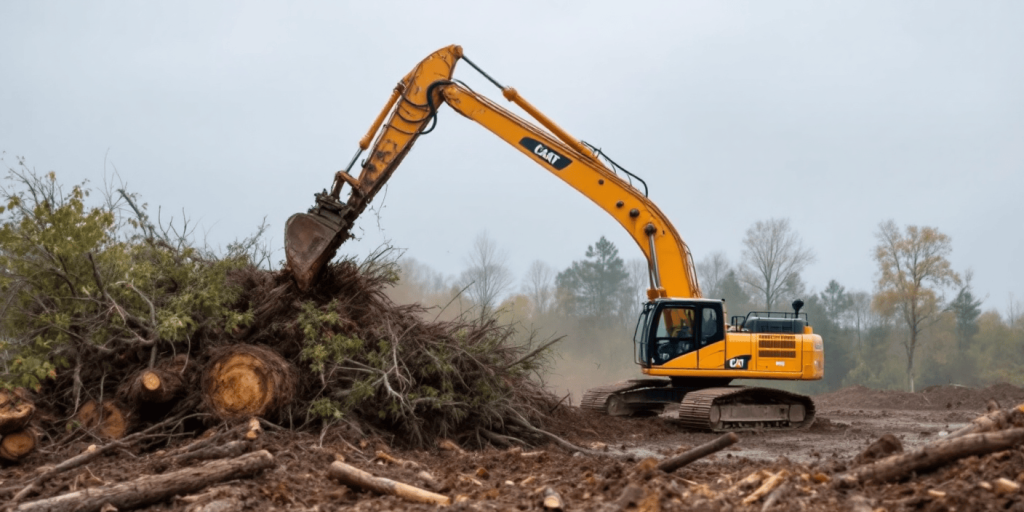
Excavators are best for properties with larger trees and heavy material.
They allow operators to:
Excavators are often the best choice when clearing land for future building.
Forestry mulchers grind smaller trees and brush into mulch. This method avoids hauling and burning.
Mulching works well for:
Mulching does not remove roots. Because of that, regrowth is more likely over time.
Root rakes are used after clearing to remove buried roots and organic material. They help improve soil stability and clean the surface.
Root raking is often required when the land will support structures or yards.
Each method has advantages and limits.
Choosing the wrong one can create problems that last for years.

Book now Property value land clearing Property value is not only about location. It is also about how usable, safe, and ready the land is.

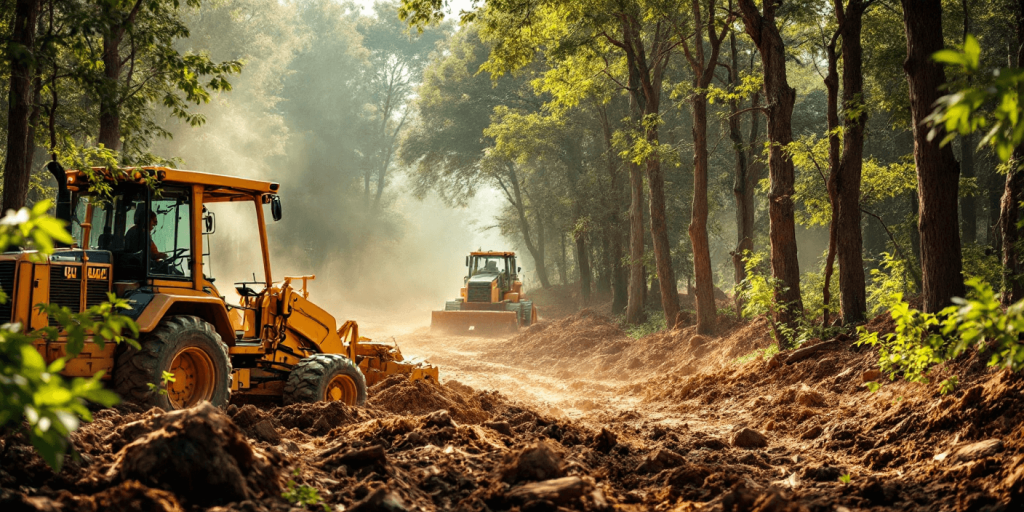
Book now Technology in land clearing Land clearing methods have undergone significant changes over the past ten years. Once a strenuous, chaotic, and semi, annually
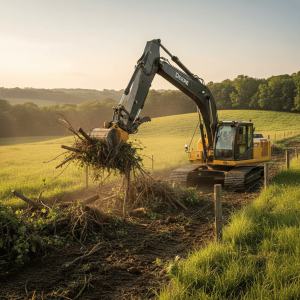
Book now Land development opportunities Land development starts with one simple question: what can this land become? Many properties look unusable at first. They can
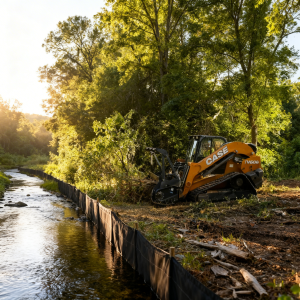
Book now Land clearing regulations Land development always starts with clearing the land. Before homes, roads, businesses, or farms can be built, vegetation and debris

Book now Future of land clearing Land clearing has always been the first step in turning raw land into usable space. Whether the goal is

Book now Building site clearing Every home starts with an idea, but it becomes real only when the land is ready. Before a foundation can

Book now Site preparation challenges Site preparation is one of the most essential parts of any land clearing project. Before a home, shop, road, or

Book now Erosion control and land clearing Land clearing is often the first step in building, farming, or improving a property. Trees, brush, and undergrowth

Book now Property maintenance underbrush Underbrush may seem like a small issue at first. It is easy to ignore a patch of vines, thick shrubs,
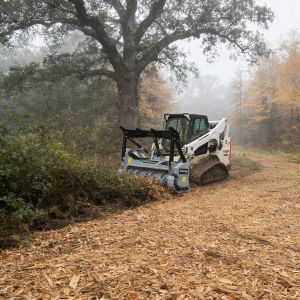
Book now Underbrush removal is one of the most important first steps in land clearing. Any piece of land if has to be used for
One of the most important parts of land clearing is deciding what to do with what gets removed. This choice affects cost, timelines, and results more than almost anything else.
Piling and Burning
When allowed by local rules, burning is often the most cost-effective option. Material is piled on site and burnt in a controlled situation.
Burning:
Burning is not always possible.
Neighborhoods, restrictions on fire, and weather can be some of the factors that prevent it.
Hauling Material Off-Site
When burning is not allowed, material must be hauled away.
This adds:
Root material almost always needs to be hauled off because it contains too much soil.
Hauling increases costs quickly and must be planned carefully.
Mulching Material in Place
Mulching turns small trees and brush into ground cover.
This avoids hauling and burning but does not remove roots.
Mulch also does not create a clean surface for building.
Mulching is best for maintenance or light clearing, not full development.
Professional land clearing always begins with evaluation.
Before machines arrive, contractors assess:
This planning determines:
Skipping this step leads to delays and added costs.
Pricing Is Not One-Size-Fits-All
Land clearing prices vary widely.
Common cost factors include:
A small residential job and a rural acreage job are priced very differently. Any article suggesting fixed pricing does not reflect real work conditions.
When clearing is done incorrectly, the issues often show up after the job is “finished.”
Common problems include:
Fixing these issues usually costs far more than professional clearing would have.
Safety Is a Major Benefit
Clear land is safer land.
Professional clearing improves safety by:
This protects workers, property owners, and future occupants.
Residential, Agricultural, and Recreational Uses
Land clearing is used across many property types.
Residential uses include:
Agricultural uses include:
Recreational uses include:
Each use requires a different clearing approach and level of finish.
We would love to speak with you.
Feel free to reach out using the below details.
When clearing is done incorrectly, the issues often show up after the job is “finished.”
Common problems include:
Fixing these issues usually costs far more than professional clearing would have.
Safety Is a Major Benefit
Clear land is safer land.
Professional clearing improves safety by:
This protects workers, property owners, and future occupants.
Residential, Agricultural, and Recreational Uses
Land clearing is used across many property types.
Residential uses include:
Agricultural uses include:
Recreational uses include:
Each use requires a different clearing approach and level of finish.
Long-Term Value Starts with Proper Clearing
Land that is cleared correctly is easier to use, manage, and sell.
Proper clearing:
It also allows future site preparation to be done correctly and efficiently.
Final Thoughts
Land clearing is not just about removing trees.
It is about removing risk.
Professional land clearing creates a clean, predictable starting point for any project. If land is not cleared properly, everything built on it is at risk.