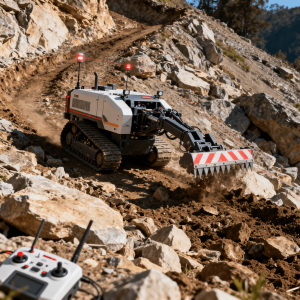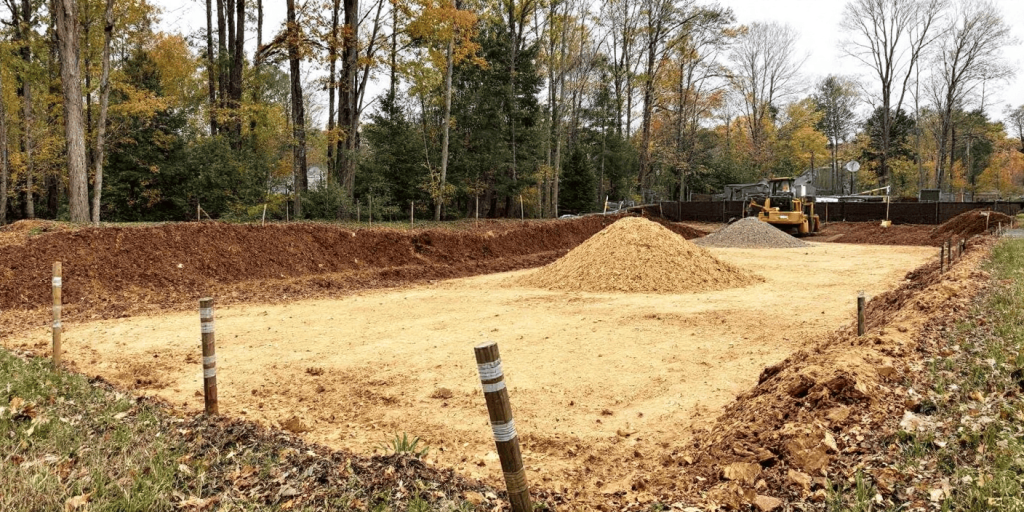
Brush & Tree Clearing: Property Value & Usability
Book now Property value land clearing Property value is not only about location. It is also about how usable, safe, and ready the land is.
Land clearing has always involved one big challenge: what do you do with all the vegetation once it’s cut down?
For decades, burning was one of the most common answers. Trees were pushed into piles, brush was stacked, and the material was burned on site when allowed.
But today, many landowners want a cleaner option. Smoke restrictions, burn bans, nearby homes, and environmental concerns have made open burning harder in many areas.
That is where forestry mulching comes in.
Forestry mulching is often described as eco-friendly burning, not because it uses fire, but because it achieves a similar goal: it eliminates unwanted vegetation without the need to haul everything away.
This article explains how forestry mulching works, why it is sometimes seen as an alternative to burning, what it costs, and when it is the right land clearing method.
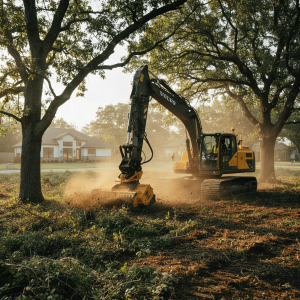
Forestry mulching is a modern land clearing technique that cuts, grinds, and shreds vegetation into mulch directly on the property.
Instead of removing trees and brush and then burning or hauling the debris, forestry mulching turns that material into a mulch layer on site.
Forestry mulching is commonly used to clear:
It is important to understand that mulching is one tool within land clearing. It is not the solution for every type of clearing project.
The phrase “eco-friendly burning” comes from the fact that mulching solves the same disposal problem burning does, but in a different way.
Burning reduces vegetation into ash.
Mulching reduces vegetation into organic ground cover.
Both methods:
A difference is that mulching does all this without smoke, open flames, or ash cleanup.
One of the major reasons that forestry mulching is selected is when burning is not allowed or when landowners want a cleaner approach.
Forestry mulching relies on machines fitted with powerful cutting heads.
Mulcher heads are:
The vegetation along the path is ground into mulch by the machine as it moves through the brush and small trees.
The cleared area is left with a layer of shredded organic material.
The mulch acts as a soil cover and its presence reduces the amount of debris that needs to be removed.
Forestry mulchingquite possiblymay be referred to as:
The vegetation is cleared and processed on-site rather than being burned or hauled away. The method remains unchanged.
What Is a Forestry Mulcher Used For?
Forestry mulchers have been extensively used in land clearing projects for residential as well as commercial purposes.
Some of the frequent applications are:
Mulching being a combination of both clearing and cleaning, up, it is one of the quickest methods of surface-level clearing.

Book now Property value land clearing Property value is not only about location. It is also about how usable, safe, and ready the land is.

Book now Technology in land clearing Land clearing methods have undergone significant changes over the past ten years. Once a strenuous, chaotic, and semi, annually
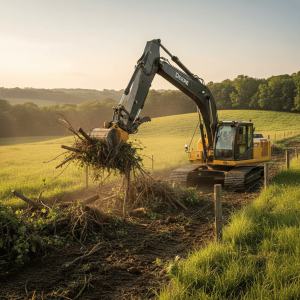
Book now Land development opportunities Land development starts with one simple question: what can this land become? Many properties look unusable at first. They can
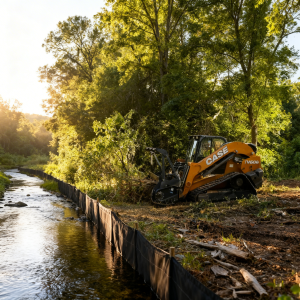
Book now Land clearing regulations Land development always starts with clearing the land. Before homes, roads, businesses, or farms can be built, vegetation and debris

Book now Future of land clearing Land clearing has always been the first step in turning raw land into usable space. Whether the goal is

Book now Building site clearing Every home starts with an idea, but it becomes real only when the land is ready. Before a foundation can

Book now Site preparation challenges Site preparation is one of the most essential parts of any land clearing project. Before a home, shop, road, or

Book now Erosion control and land clearing Land clearing is often the first step in building, farming, or improving a property. Trees, brush, and undergrowth

Book now Property maintenance underbrush Underbrush may seem like a small issue at first. It is easy to ignore a patch of vines, thick shrubs,
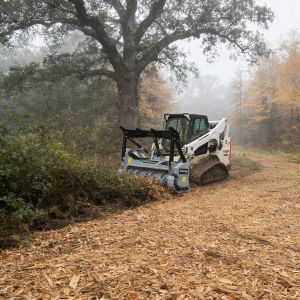
Book now Underbrush removal is one of the most important first steps in land clearing. Any piece of land if has to be used for
The mulch that remains is composed of the same vegetation that was on the land. It is not imported or treated.
This mulch layer can:
Unlike burning, which removes organic material completely, mulching keeps it in place.
That is one reason forestry mulching is often viewed as the more environmentally responsible choice.
Many landowners ask whether mulching is better than burning.
The answer depends on the site, local rules, and project goals.
Environmental Impact
Burning creates smoke, emissions, and ash. Forestry mulching avoids open air smoke
and leaves organic material in place.
Safety
Burn piles carry fire risk, especially near homes or during dry seasons. Mulching is mechanical and controlled.
Regulations
Burning is heavily restricted in many areas. Mulching is often easier to approve because it does not require fire permits.
Cleanup and Disposal
Burning often still leaves ash piles and requires supervision. Mulching leaves a finished surface without extra disposal.
Cost Differences
Burning can sometimes be cheaper in rural areas where it is allowed. Mulching can be cheaper in areas where hauling or burning is difficult.
Both methods depend heavily on local conditions.
Forestry mulching cost is not fixed. Pricing changes based on land conditions, location, and vegetation density.
The main elements affecting the costs are:
Vegetation Density
Mulching thick brush and heavy growth takes significantly longer time as compared with light underbrush.
Tree Size
Tree mulching is proper for small and medium, sized ones only. Large hardwood trees might need the use of excavators or other pieces of equipment.
Terrain and Access
Steep slopes, rocky soil, or tight access points increase difficulty and cost.
Property Size
Larger jobs cost more overall, but cost per acre may decrease with scale.
Project Purpose
Clearing for trails or maintenance is usually less complex than clearing for development.
Fuel costs, labor rates, and equipment transport also vary by region, so pricing differs from one location to another.
We would love to speak with you.
Feel free to reach out using the below details.
Forestry mulching is often cost-effective because it eliminates major cost drivers such as:
By combining clearing and cleanup into one process, mulching can simplify many projects.
Forestry Mulching Compared to Other Clearing Methods
Method Debris Handling Soil Disturbance Best Use
____________________________________________________________________________
Forestry Mulching Mulch stays on site Low Brush and small trees
____________________________________________________________________________
Excavator Clearing Piling, hauling, or burning Moderate Large trees and stumps
____________________________________________________________________________
Bulldozing Heavy debris piles High Large-scale development
____________________________________________________________________________
Burning Requires piles and permits High Rural disposal option
Mulching stands out when disposal is the biggest concern.
Residential Uses of Forestry Mulching
Homeowners often choose forestry mulching for:
It leaves a clean, natural look without large debris piles.
Commercial and Agricultural Uses
Forestry mulching is a method often used for:
Commercial ventures most of the time employ mulching merely as one step of the entire land clearing operation.
When Forestry Mulching Is Not Enough
Mulching isn’t the best option for:
Frequently, mulching is combined with excavators, root rakes, or hauling in these situations.
When Forestry Mulching Is Not Enough
Mulching isn’t the best option for:
Frequently, mulching is combined with excavators, root rakes, or hauling in these situations.
Final Thoughts
Forestry mulching has become one of the most popular land clearing methods because it offers an alternative to burning and hauling.
It is often called “eco-friendly burning” because it solves the same disposal problem without smoke or fire.
Forestry mulching is fast, practical, and cleaner for many properties. But like all land clearing methods, it works best when matched to the right site and goal.
For landowners looking for responsible clearing without burn piles, forestry mulching is one of the smartest options available today.