Land clearing is one of the most important steps in any property project, yet it is also one of the least understood.
Before construction begins on a home, business, farm, or large development, the land must be cleared properly. The way clearing is handled affects safety, access, scheduling, drainage, and long-term performance of whatever is built next.
Residential and commercial land clearing share the same foundation, but the scale, risks, and requirements are very different. Understanding those differences can help landowners and developers make decisions that are not only better but also less costly in terms of errors.
This write-up elaborates on what land clearing means in fact, its importance, the process involved, and the practical differences between residential and commercial clearing.
What Land Clearing Really Is
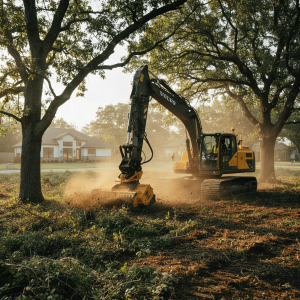
Land clearing is the controlled removal of unwanted trees, brush, stumps, roots, and surface debris from a property so the land can be safely used.
Clearing is not just about removing vegetation.
Proper land clearing also allows professionals to:
- Create usable space
- Improve access for equipment and crews
- Identify drainage paths
- Evaluate soil conditions
- Prepare the site for grading or development
Raw land is rarely ready for use without clearing. Hidden roots, dense brush, and uneven terrain make development unpredictable and unsafe.
Professional land clearing creates a clean starting point so everything that follows can be done accurately.
Why Clearing the Land Is So Important
Land clearing affects nearly every part of a project.
When clearing is done correctly, it supports:
- Structural safety
- Proper drainage
- Safe equipment access
- Fire and pest risk reduction
- Compliance with local rules
When clearing is rushed or incomplete, problems surface quickly.
Common problems caused by inadequate clearing are:
- Burying of roots which decay and cause ground settling
- Water pooling due to poor drainage that might cause erosion or water damage
- Restricting access that can hold up construction
- Vegetation regrowth that gets in the way of development
Improper clearing can bring commercial works to a halt and also increase regulatory risk.
Residential vs Commercial Land Clearing
Residential and commercial land clearing are based on the same set of principles, but they differ as services.
Residential Land Clearing
Residential clearing normally concentrates on smaller areas and accuracy in work.
Certain typical residential clearing objectives include:
- Preparing a home site
- Making driveway access
- Clearing fence lines and boundaries
- Expanding yards or usable space
On occasion, residential projects require that the home which is next door to, the utilities as well as the existing structures be disturbed to a minimum.
Accuracy matters more than speed.
Commercial Land Clearing
Commercial land clearing involves larger areas and higher risk.
Typical commercial projects include:
- Retail or office developments
- Industrial sites
- Residential subdivisions
- Agricultural or utility projects
- Commercial clearing often requires:
- Heavier equipment
- Longer timelines
- More coordination
- Greater regulatory oversight
Mistakes on commercial sites can affect budgets, schedules, and compliance.
This is why commercial land clearing requires experienced contractors with proper planning and equipment.
The Core Stages of Land Preparation
While every site is different, most land clearing projects follow a structured process.
- Site Evaluation and Planning
Professional site evaluators check the following factors before starting the clearing:
- type and density of vegetation
- soil condition
- topography and slope
- water flow patterns
- entry and exit points
Based on this planning stage, the method of clearing and the type of equipment to be used are decided.
- Vegetation Removal
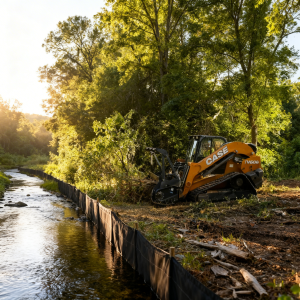
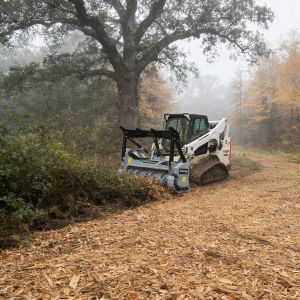
The site is cleared of trees, piles of brush and any other unwanted growth through the use of methods that are compatible with the location.
It could be through the use of mulching, mechanical clearing or the two methods combined.
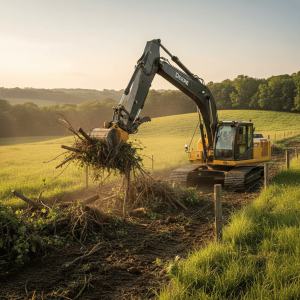
- Stump and Root Handling
Depending on the aim of the project, roots and stumps can be taken out, ground down or simply allowed to remain.
In case of construction sites, it is common to remove roots to avoid problems of the ground settling in the future.
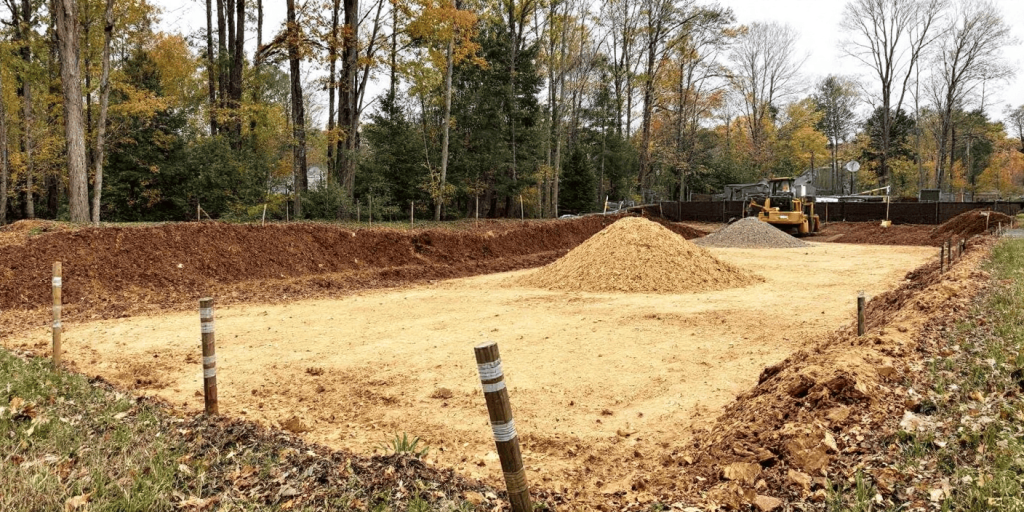
- Grading and Shaping
After the vegetation is removed, the topography of the land is modified in such a way that water drainage and future land use
Grading cannot be done accurately until clearing is complete.
- Debris Management
Clearing produces large amounts of material that must be handled responsibly.
Material may be:
- Mulched
- Piled and burned where allowed
- Hauled off-site
Debris handling is one of the largest cost drivers in land clearing.