Homesite Development Land Clearing Explained
Building a home starts long before framing or concrete work begins. The real first step is the land itself.
Raw property often looks peaceful, but it may be full of brush, uneven ground, hidden roots, and drainage problems. That is why land clearing for the development of a home site is one of the crucial steps towards the construction of a safe and durable home.
Land clearing does not mean just chopping down trees. It also involves getting the site ready so that work can proceed smoothly without any risks, interruptions, or financial repercussions due to the need for repairs.
This article outlines the main techniques employed in land development, how homesite clearing is incorporated in the overall plan, and the information that homebuilders need to have prior to construction.
What Is Homesite Development Land Clearing?
Homesite development land clearing is the process of removing vegetation, debris, and obstacles so a home can be built safely.
It often includes:
- Clearing trees and brush
- Removing stumps and roots
- Managing debris properly
- Grading the land for drainage
- Preparing access for equipment
The main goal is simple. Make the land stable, usable, and ready for construction.
Why Land Clearing Is the First Step in Homesite Development
A home depends on what is underneath it.
If land is not cleared correctly, problems can appear later, such as:
- Foundation settling
- Water pooling near the home
- Soil erosion
- Construction delays
- Extra costs for rework
Professional land clearing prevents these issues before building begins.
What Are the Techniques of Land Development?
Land development uses several techniques, but land clearing is the starting point for all of them.
Common techniques include:
- Selective Clearing
Not every tree needs removal.
Selective clearing keeps healthy trees when possible while removing problem vegetation. This is common for residential lots where appearance matters.
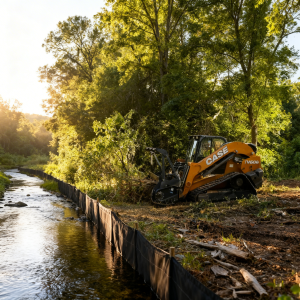
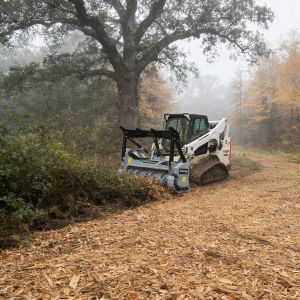
- Forestry Mulching
Forestry mulching grinds vegetation into mulch and leaves it on-site.
This method helps by:
- Reducing hauling costs
- Avoiding burning in many areas
- Protecting soil from erosion
It is often one of the most efficient clearing techniques for homesites.
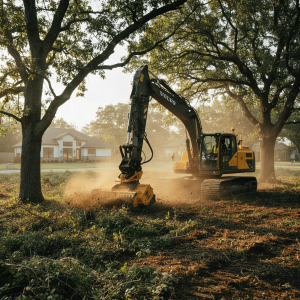
- Mechanical Clearing
Mechanical clearing uses heavy equipment like bulldozers or excavators.
This is used when:
- Dense trees must be removed
- Full clearing is required
- Large lots need fast work
Debris removal becomes a bigger issue with this method.
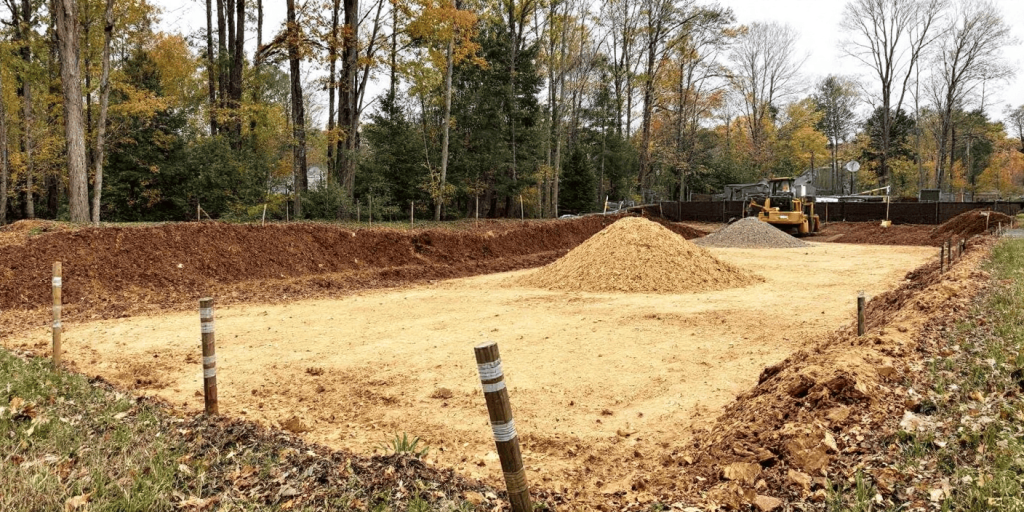
- Grading and Earthwork
After clearing, land must be shaped properly.
Grading ensures:
- Water flows away from the home
- The foundation area is level
- Soil is stable for building
Land clearing without grading is incomplete for most homesites.
- Debris Management
This is one of the biggest challenges in land clearing.
Homeowners need to know:
- Will debris be mulched?
- Hauled away?
- Burned, if allowed?
- Piled for later removal?
That’s why land clearing a home site for a new house is among the most important steps of building a safe and long-lasting home.
Clearing land is not just about cutting down trees. It also consists of preparing the background so that any work can go on quickly and safely without risks, interruptions, or money losses of obtaining repairs.
The following write-up spells out the primary methods of site development that are combined with the home site clearing component, as well as the knowledge that the builders of the house should have before commencing the construction.
What Are the 5 Stages of the Development Plan Process?
Many professionals describe development planning in five stages.
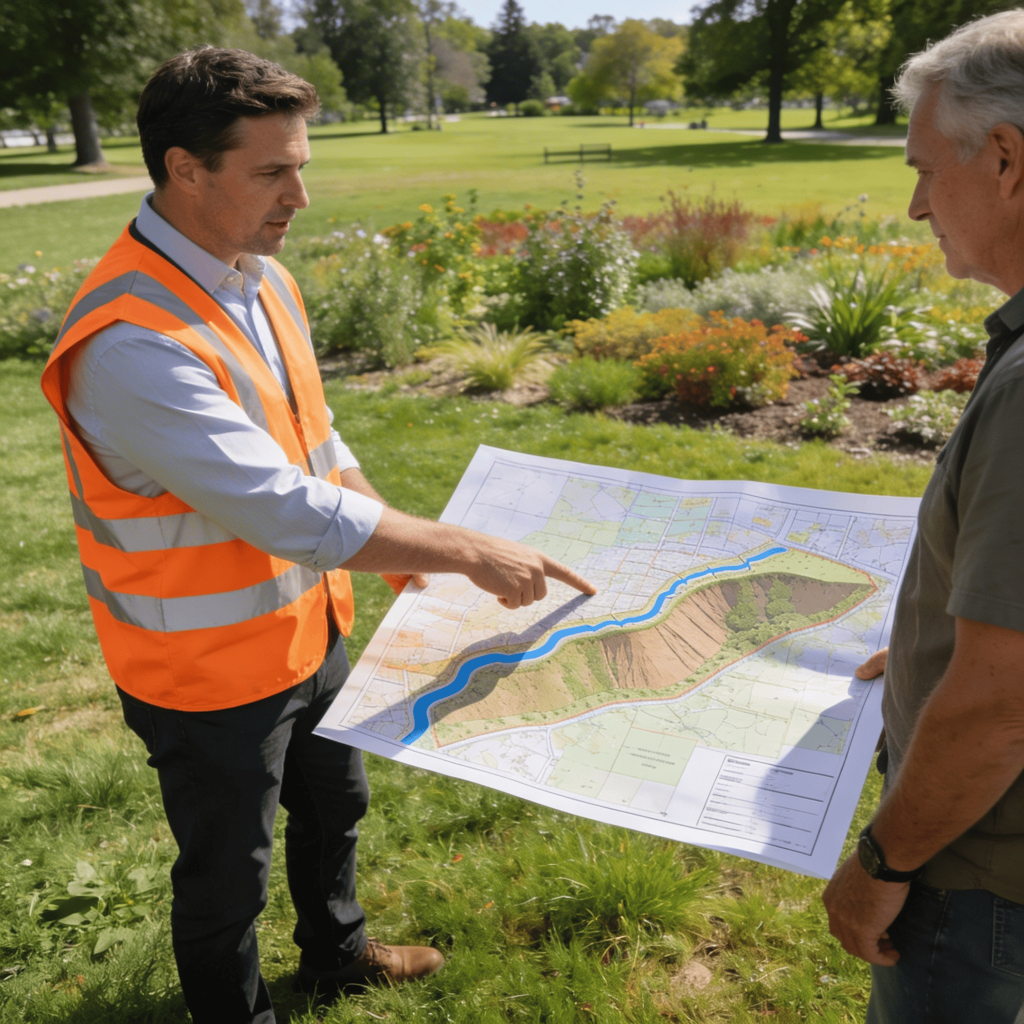
Stage 1: Site Evaluation
Before clearing begins, contractors assess:
- Vegetation density
- Soil conditions
- Drainage patterns
- Access for machinery
- Permit needs
Planning comes first, not equipment.
Stage 2: Permits and Approvals
Some areas require permits for:
- Tree removal
- Wetland protection
- Erosion control
- Burning debris
Permit rules vary by location, so homeowners should never assume.
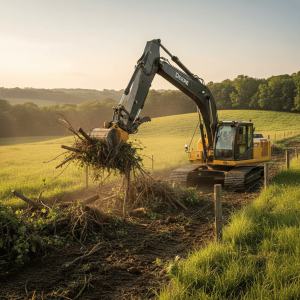
Stage 3: Land Clearing and Debris Handling
This is where homesite development land clearing begins.
The contractor removes:
- Trees
- Brush
- Roots
- Organic debris
Then decides how cleared material will be handled.
Stage 4: Grading and Soil Preparation
The site is shaped and stabilized through:
- Leveling
- Compaction
- Drainage planning
This step protects the future foundation.
Stage 5: Final Site Readiness
The lot is inspected and prepared for:
- Utility work
- Foundation construction
- Driveway access
- Safe equipment movement
Once complete, the land becomes construction-ready.