Brush & Tree Clearing: Property Value & Usability
Book now Property value land clearing Property value is not only about location. It is also about how usable, safe, and ready the land is.
Sustainable Brush Clearing That Protects Your Land
Land clearing is often the first step in improving a property. It opens space, improves access, and prepares land for future use.
But clearing does not have to damage the land. More landowners now want smarter options that remove brush while protecting soil, drainage, and long-term land health.
That is the advantage of sustainable brush clearing. This guide explains what it is, why it matters, and how eco-friendly land clearing creates better results.
Before any clearing begins, the most important question is:
What is the land being cleared for?
Brush clearing may be needed for:
The purpose matters because it affects:
Sustainable clearing always begins with a plan, not just machinery.
Sustainable brush clearing is not about clearing less. It means clearing in a way that protects the land while still achieving the project goal.
It focuses on:
The land is improved, not stripped.
Once brush and vegetation are removed, a major question remains:
What happens to all the debris after land clearing?
Proper debris handling is often the most significant cost and planning factor in clearing land.
Landowners usually have three options:
Mulching On-Site
Brush is ground into mulch and left on the property. This significantly lowers the need for hauling and disposal.
Piling and Burning
Burning may be less expensive than hauling, but prices vary depending on local rules. There are many places where burning is banned.
Hauling Away
Debris is loaded and transported off-site.
This adds major cost due to:
Sustainable brush clearing often favors mulching because it solves debris without creating waste.
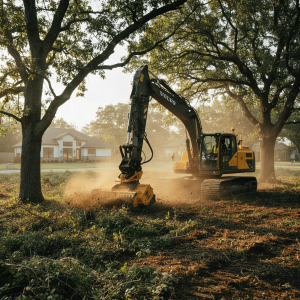
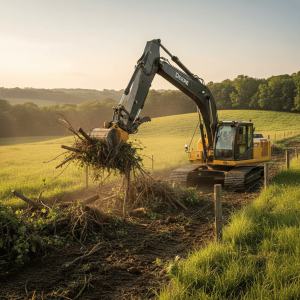
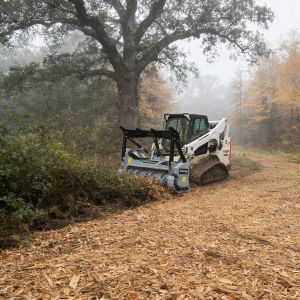
Forestry mulching is one of the most common sustainable clearing techniques. It turns vegetation into a protective mulch layer instead of removing it.
This approach helps by:
It is one of the clearest examples of eco-friendly land clearing in practice.

Book now Property value land clearing Property value is not only about location. It is also about how usable, safe, and ready the land is.

Book now Technology in land clearing Land clearing methods have undergone significant changes over the past ten years. Once a strenuous, chaotic, and semi, annually
Book now Land development opportunities Land development starts with one simple question: what can this land become? Many properties look unusable at first. They can
Book now Land clearing regulations Land development always starts with clearing the land. Before homes, roads, businesses, or farms can be built, vegetation and debris

Book now Future of land clearing Land clearing has always been the first step in turning raw land into usable space. Whether the goal is

Book now Building site clearing Every home starts with an idea, but it becomes real only when the land is ready. Before a foundation can

Book now Site preparation challenges Site preparation is one of the most essential parts of any land clearing project. Before a home, shop, road, or

Book now Erosion control and land clearing Land clearing is often the first step in building, farming, or improving a property. Trees, brush, and undergrowth

Book now Property maintenance underbrush Underbrush may seem like a small issue at first. It is easy to ignore a patch of vines, thick shrubs,
Book now Underbrush removal is one of the most important first steps in land clearing. Any piece of land if has to be used for
Soil is not just dirt. It is the foundation of everything that comes next.
Aggressive clearing can cause:
Sustainable brush clearing helps keep soil healthy by:
Healthy soil is the foundation of land value and determines the land’s long-term usability.
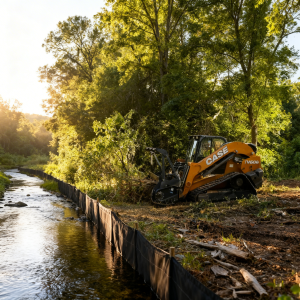
After clearing, soil erosion and drainage are the main issues to address. Clearing alters the flow of water across a property.
If a land is cleared in an overly aggressive manner, the rainfall may result in:
After clearing, soil erosion and drainage are the main issues to address. Clearing alters the flow of water across a property.
If a land is cleared in an overly aggressive manner, the rainfall may result in:
Environmentally friendly land clearing minimizes the risks by:
Brush is often cleared for safety reasons.
Overgrown land increases:
Sustainable brush clearing improves safety while still preserving healthy trees and stable ground cover. It creates defensible, usable space without damaging the property.
Can Sustainable Brush Clearing Save Money?
Yes, often. Many people assume eco-friendly work costs more. In land clearing, sustainability can reduce costs by reducing the need for debris removal, which is expensive.
Hauling adds:
Burning may require:
Mulching avoids many of these extra steps. Pricing still depends on location, terrain, and vegetation density, but sustainable methods often lower total project cost.
Equipment Matters More Than Most Landowners Realize
The most common environmentally friendly equipment can be:
The suitable machine will cut down:
We would love to speak with you.
Feel free to reach out using the below details.
Eco-friendly brush clearing is not just about the day of the work. It has affected the land for years.
Sustainable results include:
Clearing done responsibly supports long-term land improvement.
How to Know If a Contractor Uses Sustainable Practices
Not every clearing company works the same way.
Finding contractors that:
Sustainably clearing a site is about doing it right, not taking shortcuts.
Final Thoughts: Sustainable Brush Clearing Is a Better Way Forward
Clearing the land, at times, should not necessarily be harmful to the environment.
Sustainable brush clearing provides a smarter advantage:
Eco-friendly land clearing is not about doing less work. It is about doing the work correctly, with the land’s future in mind.