Brush & Tree Clearing: Property Value & Usability
Book now Property value land clearing Property value is not only about location. It is also about how usable, safe, and ready the land is.

Large commercial construction projects do not succeed by chance.
Behind every warehouse, shopping center, industrial facility, or multi-building development is a carefully planned sequence of work that begins at ground level.
Before concrete is poured or steel is erected, the land must be cleared, accessed, and controlled. This early phase is where commercial land clearing and site preparation logistics determine whether a project stays on schedule or falls behind.
Commercial site preparation is not just about moving dirt. It is about managing space, equipment, materials, and people on a large scale. When done correctly, it protects timelines, improves safety, and keeps costs under control. When done poorly, delays ripple through every phase of construction.
This article explains how land clearing fits into commercial site preparation, what large-scale site logistics really involve, and why planning at the clearing stage is critical for major projects.
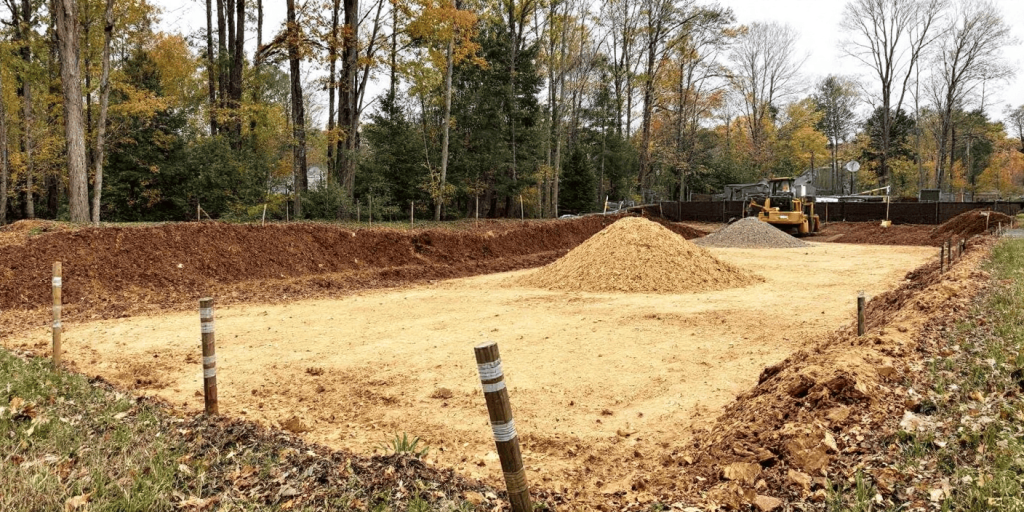
Commercial site preparation always begins with land clearing.
Large sites usually have:
Hence, logistics planning will be off if these are not taken care of first.
Professional land clearing results in:
Hence, without appropriate clearing, logisticians are just guessing with every decision.
Site logistics refers to how all activity on a construction site is planned and coordinated. On large projects, this is as important as the physical work itself.
In commercial site preparation, logistics determine:
Good logistics prevent congestion, downtime, and safety hazards.
Large-scale commercial projects typically involve:
Common examples include:
At this scale, small mistakes during land clearing and site prep can create large problems later.
As project size increases, complexity multiplies.
Large sites require:
Commercial site preparation must account for all of this before vertical construction begins.
Land clearing decisions made early affect every later phase.

Book now Property value land clearing Property value is not only about location. It is also about how usable, safe, and ready the land is.

Book now Technology in land clearing Land clearing methods have undergone significant changes over the past ten years. Once a strenuous, chaotic, and semi, annually
Book now Land development opportunities Land development starts with one simple question: what can this land become? Many properties look unusable at first. They can

Book now Land clearing regulations Land development always starts with clearing the land. Before homes, roads, businesses, or farms can be built, vegetation and debris

Book now Future of land clearing Land clearing has always been the first step in turning raw land into usable space. Whether the goal is

Book now Building site clearing Every home starts with an idea, but it becomes real only when the land is ready. Before a foundation can

Book now Site preparation challenges Site preparation is one of the most essential parts of any land clearing project. Before a home, shop, road, or

Book now Erosion control and land clearing Land clearing is often the first step in building, farming, or improving a property. Trees, brush, and undergrowth

Book now Property maintenance underbrush Underbrush may seem like a small issue at first. It is easy to ignore a patch of vines, thick shrubs,
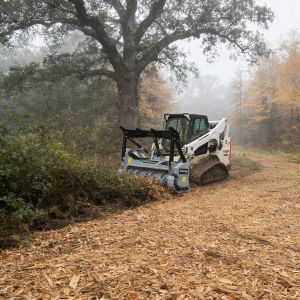
Book now Underbrush removal is one of the most important first steps in land clearing. Any piece of land if has to be used for
Logistics planning starts while the site is being cleared, not after.
During land clearing, logistics determine:
Poor coordination during clearing leads to bottlenecks that slow grading, utilities, and construction.
Understanding logistics types helps explain how large-scale projects stay organized.
Inbound logistics are a set of processes that deal with the arrival of goods at a site.
Here is a list of things that happen at inbound:
Good inbound planning results in no equipment conflicts and a smooth flow of works.
Outbound logistics, by contrast
This includes:
Debris handling is one of the largest cost drivers in commercial land clearing. Poor outbound planning quickly increases expenses.
Internal Logistics
Internal logistics control movement within the site.
This includes:
On large sites, internal logistics are essential to prevent accidents and downtime.
Reverse Logistics
Reverse logistics manage returns, recycling, and overflow.
This may include:
Large-scale site preparation follows practical planning principles.
Applying the Five Key Logistics Principles
Large-scale site preparation follows practical planning principles.
✔️What Materials and Equipment Are Needed
Every phase requires specific machines, tools, and supplies. Clearing equipment differs from grading equipment.
✔️Where Everything Is Positioned
Material staging and equipment parking must support workflow, not block it.
✔️Cost Control
Efficient logistics minimize vehicle idling, fuel consumption, and labor time.
✔️Workflow Planning
Do not only plan the workflow but also carefully sequence the tasks. Clearing, hauling, grading, and compaction should be coordinated with each other.
✔️Performance Tracking
Timelines, safety, and productivity are monitored to keep the project moving.
While every project is unique, large-scale commercial prep typically follows a structured sequence.
After initial clearing, professionals assess:
This determines how logistics will function throughout the project.
Vegetation, trees, and roots are removed.
Material handling is arranged in such a way that the clearing work does not interrupt other operations.
Huge amounts of dirt are shifted to match the planned elevations.
This phase requires heavy equipment coordination and precise logistics.
Temporary roads, access routes, and staging areas are established.
These systems support logistics for the remainder of construction.
Soil compaction, drainage features, and erosion control are completed.
Vertically, the building can be constructed after the site is completely prepared.
We would love to speak with you.
Feel free to reach out using the below details.
Equipment Coordination on Large Sites
Commercial site prep entails multiple machines handling different tasks simultaneously.
Typical equipment used:
Logistics planning makes sure that:
If there is poor coordination, it results in the delays and additional costs.
Safety and Compliance at Scale
Large-scale projects are more risk, concentrated.
Commercial site preparation should concentrate on:
✔️Differentiating equipment and workers as well as clearly defining travel paths.
Environmental and Regulatory Considerations
Commercial projects frequently encounter:
Logistics planning must consider compliance at every stage.
Disregarding rules can result in work being stopped completely.
Common Logistics Mistakes in Commercial Site Prep
Most of the time, the root causes of the issues were the very same ones that kept happening.
Common mistakes include:
Such errors cause the projects to be delayed and the costs to be increased.
Why Experience Matters in Commercial Site Preparation
The one with the most experience has the edge when it comes to big projects.
Professional commercial site preparation contractors know:
Experience reduces uncertainty and keeps projects moving.
Final Thoughts
Commercial construction does not begin when buildings go up.
It begins when the land is cleared and logistics are planned.
Commercial site preparation is the backbone of large-scale development. It is where land clearing, logistics, safety, and coordination come together.
When done correctly, it creates a stable, efficient foundation that supports every phase of construction that follows.
On large projects, success starts at ground level.
Strong logistics make it possible.