Over time, underbrush can slowly take over a property.
What were once clear property lines become hidden.
Access disappears.
Safety risks increase.
Underbrush removal is often the first visible step in land clearing, especially when the goal is to reclaim boundaries, improve access, or prepare land for future use. At first glance, it may seem like a walk in a park but the removal of underbrush is highly related to major land clearing decisions which affect cost, safety, and long-term results.
Getting to know how underbrush relates to professional land clearing will help property owners to make wise decisions and prevent costly errors.
How Underbrush Removal Fits Into Land Clearing
Underbrush removal is a type of land clearing that focuses on vegetation from the ground level to a height of a few meters. It can be the thick brush, creepers, small trees, invasive plants, and the ground cover.
Full-scale clearing is completely different in that it involves the removal of large trees and the reshaping of terrain, whereas underbrush removal normally aims at:
- Property lines and boundaries
- Garden fences
- Paths and walkways
- Extensions of gardens
- Firebreaks
- Places where future clearing/development is anticipated.
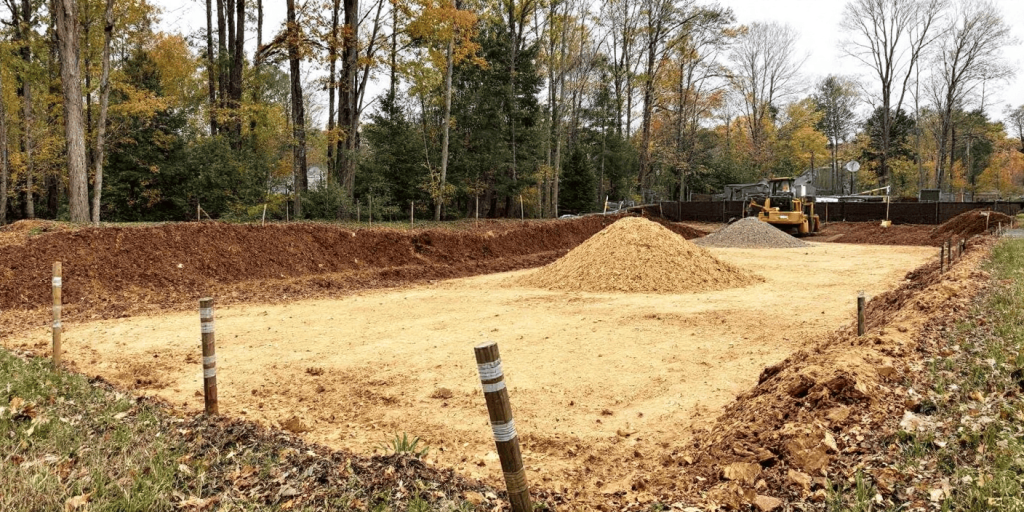
More than often underbrush removal is the opening act of land clearing, rather than the closing. Removing the underbrush gives the contractors an unobstructed view of the land and the freedom to make the next step decision.
Why Dense Underbrush Can Make It Difficult to Use Your Property
Thick undergrowth can cause a lot more trouble than a lot of property owners realize.
Uncontrolled underbrush can:
- Conceal property lines
- Be a fire hazard
- Make it difficult for the transportation of machinery
- Bring pests and wildlife closer to the living areas
- Hold moisture and lead to erosion
- Obstruct proper land evaluation
Removal of underbrush helps in regaining sight and command over the land. It opens up opportunities for owners to assess their assets, visualize and plan their intentions.
What Is Removed During Underbrush Clearing
Professional underbrush removal focuses on clearing material that prevents access, visibility, and safe use of the land.
Typical material removed includes:
Small Trees and Saplings
These are cut to open space without removing healthy, mature trees unless requested.
Brush and Shrubs
Dense shrubs and woody growth are cleared to reclaim ground space and property lines.
Vines and Ground Cover
Vines often choke trees, hide hazards, and spread aggressively if not controlled.
Fallen Limbs and Organic Debris
Dead material is removed to reduce fire risk and improve access.
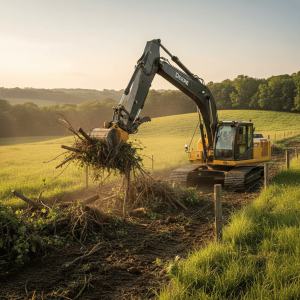
Stumps and Roots (Optional)
Depending on the project, stumps may be left, ground, or fully removed. This choice affects cost and future land use.
The scope of removal is contingent upon the owner’s objectives. Clearing for visibility differs from clearing for construction purposes.
Choosing the Right Clearing Method
There is no single “best” way to remove underbrush.
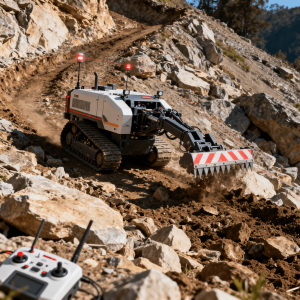
The right method depends on land size, vegetation density, terrain, and budget.
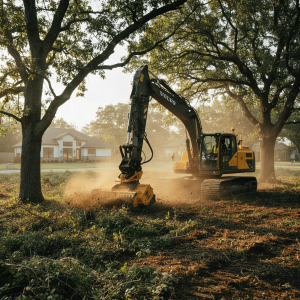
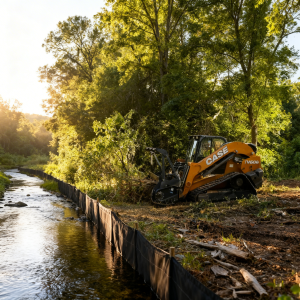
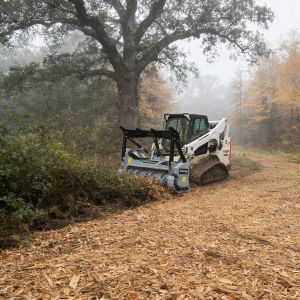
Forestry Mulching
Forestry mulchers grind brush and small trees into mulch on site.
This method:
- Reduces hauling costs
- Works well for dense growth
- Leaves organic material on the ground
Mulching is common for boundary lines, trails, and large areas where full removal is not required.
Brush Hogging and Rotary Mowing
Brush hogs are effective for fields and light brush.
They are faster than manual clearing but do not remove roots. Regrowth should be expected over time.
Manual Clearing
Hand tools and chainsaws are sometimes used in tight or sensitive areas.
Manual clearing is slow and labor-intensive.
It works best for small sections or areas near structures.
Combination Clearing
Most professional land clearing jobs require the use of multiple methods.
For instance:
- Mulching thick brush
- Cutting selective trees by hand
- Cleaning debris with machinery
This way the method balances the gains of efficiency, cost, and control.