Land Clearing Services:
What to Know Before Starting Your Project
While many people think land clearing is only for building homes, it actually serves many other purposes. It is commonly used to expand yards and outdoor spaces, open up farm fields and pastures, create trails and access roads, improve visibility and safety, and boost property value. Additionally, it prepares land for homes, shops, and other structures.
Beyond the Surface: What Actually Happens During Land Clearing?
Among the initial steps in preparing land for development, land clearing is one of the most important. Whether you’re building a house, laying a driveway, farming, or developing a commercial site, proper land clearing is the foundation for all future work.
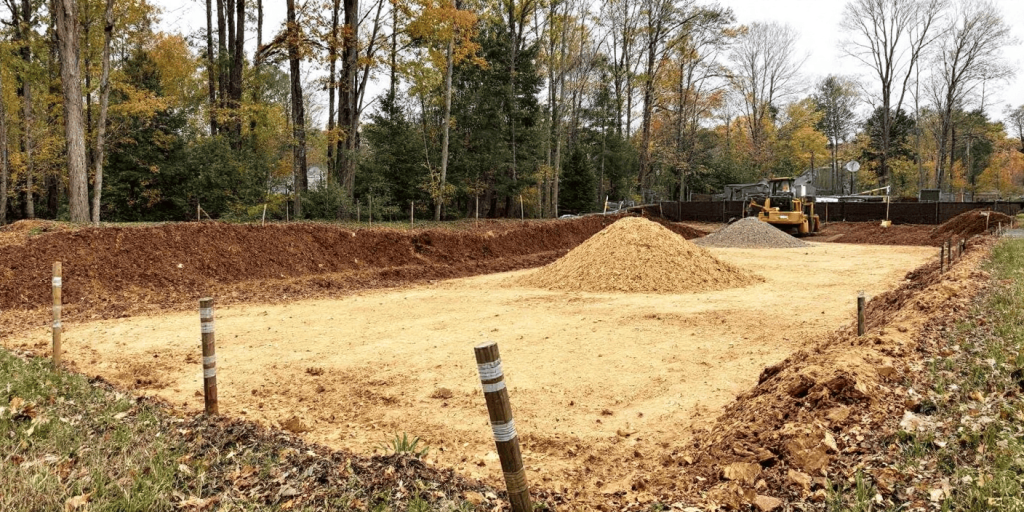
Land clearing isn’t just about cutting trees. A professional’s job is also to remove vegetation, stumps, roots, and debris to ensure the land is stable, safe, and ready for construction.
Many property owners assume land clearing is simply “cutting down trees.” In reality, professional clearing is a strategic site reset. It is the process of managing both surface vegetation and sub-surface organic matter to ensure your land is stable, safe, and engineered for its next chapter.
If you are building a structure, the work done underground is just as important as the work done above ground.
Here is the technical breakdown of a professional clearing operation:
Tree and Brush Removal
First, the crew clears the bushes and trees that are in the way of your project. A professional will help you identify and save the “keeper” trees that add beauty and value to your property. This step opens up the space so you can finally see the land you are working with. It is the foundation for every step that follows.
Stump Removal and Grubbing
Next, the machines pull the heavy stumps and root balls out of the earth. It is very important to remove the entire root system, not just cut the tree at the ground. If roots are left to rot underground, they can eventually cause sinkholes or crack your new foundation or driveway. This step ensures your land stays solid and safe for building.
Root Raking and Cleanup
After the big stumps are gone, a special rake combs through the top layer of dirt. This pulls out smaller roots, hidden sticks, and debris that the larger machines might have missed. This “combing” makes the soil clean and smooth for the next phase. It is essential if you want to plant a nice lawn or dig for utility lines without hitting obstructions.
Disposal and Hauling
Finally, you must decide what to do with the piles of leftover wood and brush. You can mulch the material back into the soil, burn it if it is legal in your area, or pay to have it hauled away. Mulching is usually the cheapest choice, while hauling it to a dump is the most expensive. This decision will have the biggest impact on your final project bill.
Contact us today!
We would love to speak with you.
Feel free to reach out using the below details.
Factors Influencing Land Clearing Costs:
The cost of clearing land varies based on:
– The size of the area
– Tree density and size
– Soil gradient and type
– Disposal methods and required permits
– Accessibility for heavy equipment
Warning: Do not hire contractors who agree to bury stumps or debris in the area where buildings are going to be constructed.
This could result in ground failure of a serious nature in the future. Land clearing properly done is a good preventive measure against drainage problems, foundation issues, and costly delays.
Take the First Step in Your Land Journey.
Tell us about your property and your goals. We’ll help you understand the costs and match you with the right local expert in your county.